In this article: Learn why some buildings need infrared electrical inspections while others don’t, what happens when an inspection reveals a problem, and how building owners and property managers can address the findings.
Two buildings are preparing for an electrical safety inspection. One needs infrared thermography. The other doesn’t. Why?
It might come down to where the buildings are located, the size of their electrical systems, or a concern that came up during an earlier inspection.
And here’s something else worth knowing: even when thermography isn’t required, it can still uncover electrical problems that might otherwise go unnoticed.
So when should you consider it, and what happens if the inspection finds something?
Why Does One Building Need Thermography and Another Doesn’t?
Local Building Safety Requirements
In South Florida, the answer often starts with local requirements for building safety inspections or recertifications.
Take Miami-Dade County and Boynton Beach in Palm Beach County. Both require infrared thermography as part of building recertification when the electrical service is rated at 400 amps or higher.
Learn more about Boynton Beach’s building recertification requirements.
Boca Raton takes a different approach. Thermography isn’t listed as a blanket requirement, but it’s strongly recommended in certain circumstances. In practice, electrical inspection reports may be returned for additional information when thermal imaging hasn’t been included.
Read about Boca Raton’s building recertification process.
And those aren’t the only reasons to schedule an inspection.
When an Electrical Safety Inspection Raises Concerns
Sometimes, an electrical safety inspection raises questions that call for further investigation. An electrical engineer might notice an unusual condition in a panel and recommend thermography to help identify the problem.
For example, in Broward County, infrared thermography isn’t required for every electrical inspection under its Building Safety Inspection Program. However, Broward allows the inspecting professional to use it when something warrants a closer look.
Read more in our 2026 Broward County Building Safety Inspection Program guide.
Or you’re responsible for an older commercial property and want to check for potential electrical trouble before it causes an unexpected shutdown. In those situations, thermography can be useful even without a recertification deadline.
BUILDING MAVENS
Questions about your building’s next step?
Whether you’re addressing an immediate concern or planning ahead, our licensed engineers can help you understand your property’s needs, determine the right next steps, and move forward with confidence.
 Licensed engineers. Clear guidance. South Florida expertise.
What Happens When an Infrared Inspection Finds a Problem?
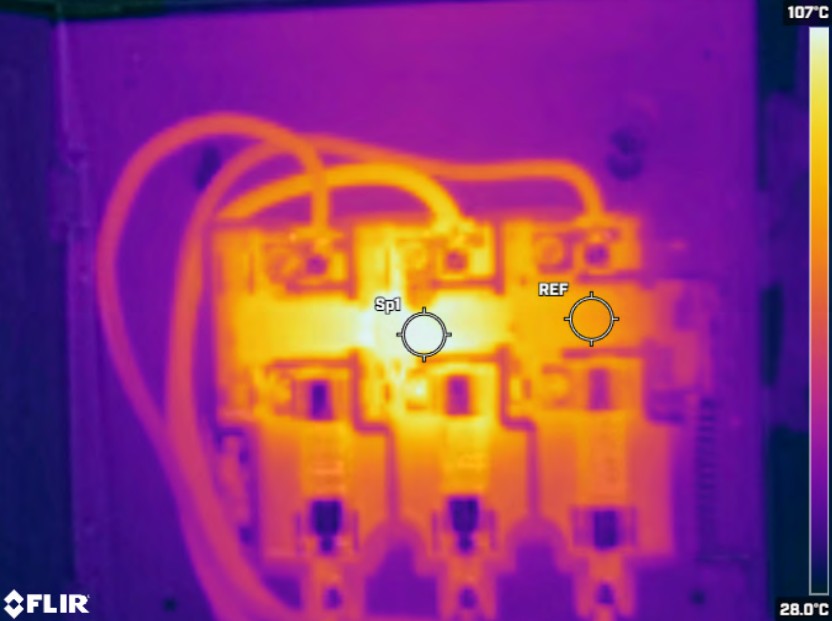
During a recent inspection at a condominium building in Boca Raton, our electrical engineer spotted something unusual.
A connection inside a fused disconnect serving an air-conditioning unit was much hotter than expected. One phase measured approximately 226°F, compared with 160°F at the reference point.
Our engineer classified the finding as critical.
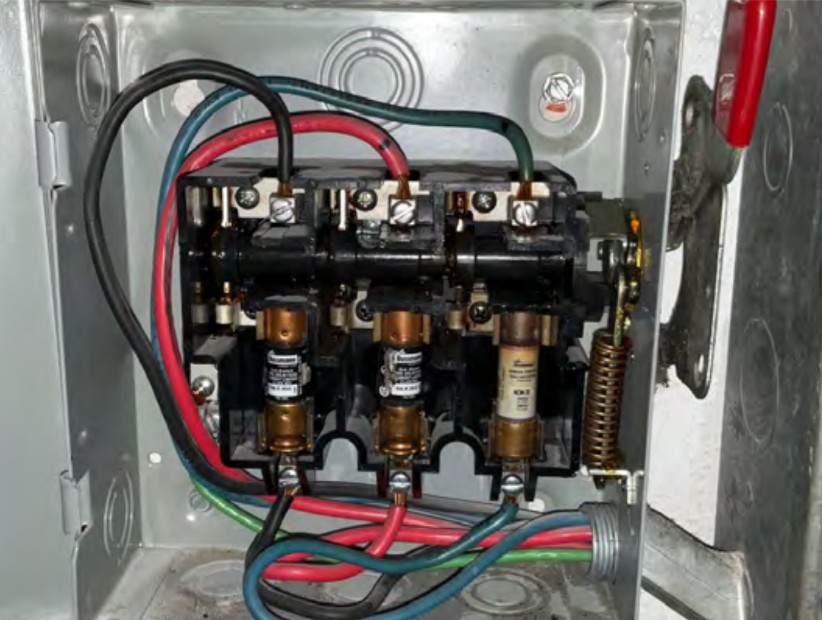
An electrical contractor was already on site and, after investigating the condition, tightened a loose connection associated with the abnormal reading.
What If Your Building’s Inspection Finds Something Similar?
The first thing you’ll want to know is how serious it is and what needs to happen next.
Not every unusual temperature reading signals an emergency. Some findings need immediate attention. Others may call for further investigation or planned maintenance.
The electrical thermographer evaluates the temperature differences, considers the electrical equipment and its operating conditions, and assesses how serious the finding may be. In many cases, that expertise helps identify a likely cause and recommend what needs to happen next.
If the finding points to a serious safety concern, the engineer communicates it promptly. An electrical contractor can then investigate further and carry out any necessary repairs.
That’s what makes the inspection valuable: it helps identify problems and gives owners a clearer idea of where to focus their attention.
What Happens After the Inspection?
Once the inspection is complete, you’ll receive a report explaining what was found, which items need attention, and how urgently they should be addressed. For a property owner or manager, that report becomes the starting point for the next steps.
If repairs are needed, you’ll typically coordinate with a licensed electrical contractor. Depending on the findings and the applicable inspection program, you may also need to submit documentation, meet repair deadlines, or arrange a follow-up inspection.
In the Boca Raton example, our team returned later that year as part of the recertification process. The follow-up inspection confirmed that the previously identified critical and high-priority conditions had been corrected. Some medium-priority maintenance items still needed attention.
The key is to understand what your particular inspection requires, rather than assume every building follows the same process.
Your engineering team can help explain the findings, identify applicable requirements, and clarify what documentation or follow-up inspections may be needed.
Frequently Asked Questions About Infrared Thermography
Broward and Miami-Dade Counties require buildings seeking recertification with electrical services operating at 400 amperes or more to have a thermography inspection. However, the individual equipment does not need to be rated at 400 amperes or more. Applicable equipment includes busways, switchgear, panelboards (except in dwelling unit load centers), disconnects, variable frequency drives (VFD), starters, control panels, timers, meter centers, gutter, junction boxes, automatic/manual transfer switches, exhaust fans, and transformers, which all require a thermography inspection. Condominium units are, however, excluded from the thermography inspection.
Infrared thermography uses thermal imaging to detect variations in temperatures across surfaces, identifying potential problems like water leaks, insulation failures, or electrical issues that are not visible to the naked eye.
Yes, by identifying areas of heat loss or gain, you can address insulation problems or air leaks, leading to more efficient energy use and lower utility bills.
Annual inspections are recommended to monitor the building’s condition over time, though more frequent checks may be necessary for buildings with known issues or after major repairs.
No. Thermography is a noninvasive method that does not require physical contact with surfaces, allowing inspections to be conducted without disrupting building occupants or operations.
It can detect various issues, including electrical hot spots, moisture intrusion, deficient insulation, and structural defects that could lead to energy loss or safety concerns.
When performed by trained professionals like our team at Building Mavens, thermography is highly accurate, providing a clear picture of potential issues that may not be visible through other inspection methods.
Yes, infrared thermography is versatile and can be applied to any type of building, from residential homes to large commercial or industrial facilities.
The time varies based on the building’s size and complexity, but most inspections can be completed within a day.
While infrared thermography doesn’t directly detect mold, it can identify conditions conducive to mold growth, such as moisture accumulation.
The cost of an infrared thermography inspection can vary widely based on several factors, including the size of the property, the complexity of the structures involved, and the specific requirements of the inspection. To get a precise estimate, it’s best to consult with us or any professional inspection service that offers infrared thermography. We will consider the specifics of your property, such as square footage, type of construction, and any particular areas of concern you have, to provide a tailored quote. Keep in mind that while cost is an important factor, the expertise of the inspector and the thoroughness of the inspection are the more important factors to consider for identifying potential issues and saving on future repair costs. When it comes to quality work, you typically get what you pay for.
About the Author
 Scott Harvey-Lewis is the owner and President of Building Mavens, a leading Milestone Inspections and Engineering Consulting firm right here in Palm Beach Gardens, Florida. With over 18 years of experience as a forensic engineer, Scott brings a wealth of knowledge and a passion for ensuring the safety and integrity of buildings. He holds a master’s degree in civil engineering from the University of Florida and a bachelor’s degree in civil engineering from the Florida Institute of Technology. He is also a Licensed Professional Engineer in Florida and a LEED Accredited Professional.
Scott’s background is extensive, covering both public and private projects. He’s highly skilled in structural engineering design, construction oversight, and forensic analysis. This includes investigating structural failures, construction defects, and code compliance – all critical to maintaining safety and adhering to building codes. Beyond his investigative work, Scott is also an accomplished design engineer, contributing to various architectural elements from building envelope systems to designs for a wide range of structures. From the initial concept to the final inspection, Scott is dedicated to providing innovative and compliant engineering solutions.
You can contact me directly for more information: info@buildingmavens.com.