In this article: we explain how South Florida building recertification and safety inspection programs apply to commercial properties and why knowing the difference between statewide inspection rules and local recertification programs matters. We review where these rules apply across Miami-Dade, Broward, Boynton Beach, and Boca Raton, what is reviewed during structural and electrical inspections, and how report and repair timelines work. We also outline what happens when issues are found and how staying ahead of required inspections helps protect your property, your tenants, and long-term ownership value.
If you’re responsible for a commercial building in South Florida, whether it’s an office tower, medical center, shopping plaza, hotel, industrial building, or large assembly venue, you’ve likely heard increasing discussion about “30-year building recertification” and local building safety inspection programs.
A common misconception is that these rules apply only to condominiums. That’s not true.
In Miami‑Dade, Broward, Boynton Beach, and Boca Raton, commercial buildings are squarely within the scope of mandatory building recertification inspections. Understanding which building recertification program (statewide vs. local) applies to your building can save you time, money, and serious liability.
Let’s walk through this clearly and simply.
Why Building Safety and Recertification Inspections Exist
South Florida is a beautiful coastal region, but its climate is tough on buildings. Constant humidity, salt in the air, water intrusion, intense sun, and hurricane‑force winds all speed up the deterioration of concrete, stucco, rebar, and exterior electrical systems. Building recertification programs exist for one simple reason: to confirm that a building remains structurally and electrically safe for continued use.
Long before Florida created its statewide Milestone Inspection HB913 Law in 2022, parts of South Florida were already far ahead.
Miami‑Dade County introduced one of the country’s earliest recertification programs in the mid‑1970s, requiring buildings to complete structural and electrical inspections at 40 years of age and every 10 years thereafter.
Broward County followed decades later in 2005, launching a nearly identical 40-year recertification program, effective county‑wide in 2006, directly modeled on Miami‑Dade’s long‑standing system.
Milestone vs Recertification
When the state stepped in after the 2021 Surfside collapse, these local programs were not new. They had been safeguarding buildings for almost 50 years. The Surfside tragedy prompted lawmakers to require structural inspections statewide for condos and co‑ops, filling gaps in other counties. But in Miami‑Dade and Broward, the concept of regular building safety inspections was already deeply established.
For commercial building owners, this distinction matters:
- The statewide Milestone Inspection Law focuses on structural inspections for condos and co‑ops
- Local recertification programs in Miami‑Dade, Broward, Boynton Beach, and Boca Raton apply to commercial buildings and require both structural and electrical inspections, following strict re‑inspection cycles every 10 years.
These local rules, not the statewide law, are what govern commercial properties today.
Where Local Building Recertification Inspections Apply (and to What Commercial Properties)
Broward County Building Safety Program
As of August 9, 2024, Broward’s Building Safety Inspection Program (BSIP) requires a first inspection at 25 years, then every 10 years.
A commercial building qualifies if it is over three stories or 50 feet tall, or if it has a large assembly occupancy (more than 5,000 square feet and 500 people). “Minor structures” under 3,500 square feet can still qualify if they support critical structural or electrical systems, such as generator enclosures, fire pump rooms, or elevator equipment rooms. (broward.org)
Real‑world examples that meet Broward’s criteria:
- A four‑story boutique hotel that’s only 45 feet tall → qualifies (over three stories).
- A three‑story medical building with tall floor‑to‑floor heights totaling 55 feet → qualifies (over 50 feet).
- A 10‑story office tower downtown → obviously qualifies.
- A conference center with a 6,000-square-foot ballroom hosting 700 attendees → qualifies as a threshold assembly space.
These examples track directly with Broward’s “threshold building” definition. But even buildings with one, two, or three stories may still qualify for a building safety inspection (see our article Does my building’s height in Florida affect safety inspection requirements?).
Miami-Dade County Building Recertification
Miami‑Dade’s program has recertified buildings since 1975 and was updated in 2022: Commercial buildings built in 1993 or later need recertification at 30 years and every 10 years thereafter. The County also strengthened its program, publishing updated structural and electrical guidelines and official report templates. (miamidade.gov)
Boynton Beach Recertification Inspection
Boynton Beach created its own building recertification program after Surfside and now requires recertification for qualifying buildings at 25 years, then every 10 years. It includes threshold buildings and electrical service equipment (excluding unit panels) and specifically calls for phase‑one balcony/guardrail evaluations where applicable, even on some commercial occupancies with elevated pedestrian areas. (boynton-beach.org)
Boca Raton Building Recertification
On August 24, 2021, the Boca Raton City Council adopted Ordinance No. 5589, establishing Section 19‑162 of the Code of Ordinances, known as the Building Recertification Inspection Program.
The program requires recertification for threshold buildings (commercial included) at 30 years, then every 10 years. A threshold building is over three stories or 50 feet tall, or has large assembly spaces (more than 5,000 square feet and 500 occupants). The City provides structural and electrical checklists and a formal submission process. (myboca.us)
What a Building Recertification Inspection for a Commercial Property Looks Like
Even though each city or county has its own schedule and paperwork, the inspections themselves follow the same logic. In our article, “Walking the Site With a Florida Building Recertification Engineer: What Passes, What Fails, and Why“, we take you along on a typical site visit.
Structural Inspection
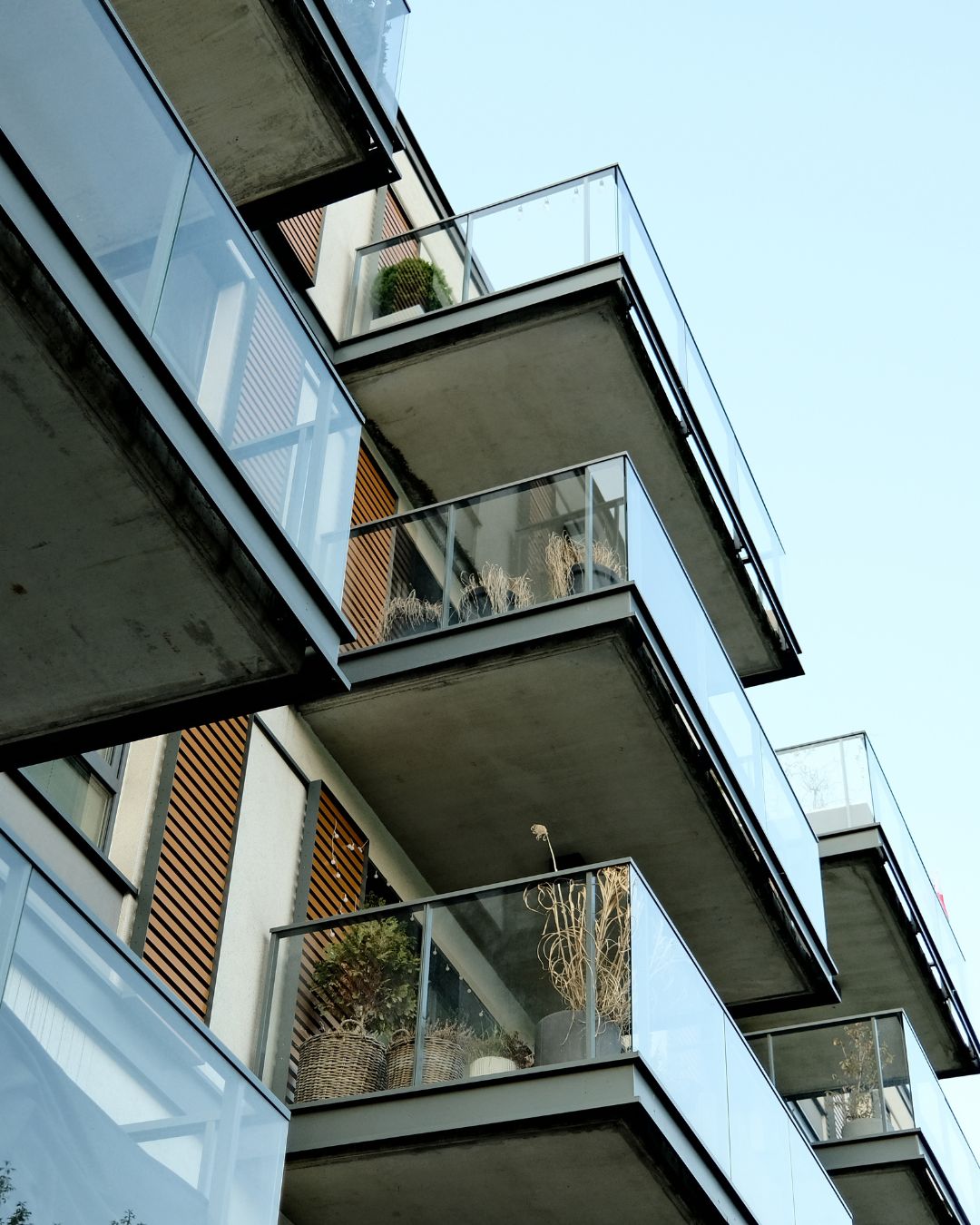 During the structural inspection, engineers walk through the building’s main load‑bearing areas—foundations, slabs, beams, columns, roof structures—and the exterior elements where early damage usually appears, like parapets, parking garages, decks, stairs, balconies, and railings. As they move through the property, they look for common coastal‑environment issues: flaking concrete (spalling), exposed or corroding rebar, cracks that show movement, signs of water intrusion, or areas where parts of the structure seem to be shifting out of place or not sitting as firmly as they should.
A building in good shape may show nothing more than small, harmless hairline cracks. A building in distress, however, may reveal more serious issues like concrete separating enough to expose corroding rebar, which is a classic indicator of chloride‑driven deterioration in Florida’s marine climate.
Electrical Inspection
 The electrical inspection focuses on the systems that keep the building safely powered. Engineers review the main service equipment, breaker panels, feeders, raceways, and any outdoor electrical components exposed to weather. They also confirm that emergency lighting and egress illumination work properly and can operate long enough during a power outage.
Throughout the building, they look for early warning signs such as loose or overheating connections, moisture inside electrical enclosures, corroded conduits, or unusual hot spots seen through infrared scanning.
When systems are healthy, panels remain balanced, conduits stay dry, and emergency lights hold their required 90‑minute runtime.
When problems exist, they tend to show up quickly. For example, a main breaker might glow hot on a thermal scan due to loose lugs, or exterior conduits begin to fail from corrosion. These require timely correction to maintain safety and compliance.
Targeted Testing When Needed
In most cases, building inspections remain visual. But when conditions justify a closer look, engineers may use methods such as:
- Ground‑penetrating radar (GPR) for internal concrete mapping
- Roof moisture surveys using infrared or electrical impedance
- Infrared thermography to detect overheating electrical components
These targeted methods help confirm whether issues are isolated or widespread. Meanwhile they allow the building to remain operational with minimal disruption.
Who Completes the Inspection Report and What Should Be In It?
Each jurisdiction has its own official forms to be completed for each discipline: one structural inspection report and one electrical inspection report.
These must be written, signed, sealed, and submitted by a Florida‑licensed professional engineer or registered architect.
The report must clearly state whether the building is safe, unsafe, or safe with qualifications, and it should include photos, observations, and recommended corrective actions.
What Happens If Repairs Are Needed?
Start immediately on any repair that does not require a permit
When the inspection reveals issues that need attention, your next steps depend on the type of repair. Tackle anything that doesn’t require a permit right away (like minor electrical adjustments or small patch-and-paint concrete fixes). Addressing these items promptly keeps you ahead of the overall timeline and prevents avoidable delays.
Begin permit applications right away for major repairs
For repairs that do require a permit, it’s important to begin the permitting process as soon as possible. Work such as concrete restoration, structural reinforcement, electrical replacements, or roof system repairs often involves reviews, approvals, and coordination with contractors, all of which take time. Starting early ensures you don’t lose valuable days in the compliance window.
Deadlines for reports and repairs after receiving the official notice
Each local jurisdiction enforces its own deadlines, and meeting them is essential for staying in good standing.
Miami‑Dade: You have 90 days to submit the inspection reports and 150 days to complete non‑permitted repairs and secure all required permits.
Broward: You must submit your report within 180 days of receiving notice and complete repairs within 180 days after the report is filed.
Boynton Beach: Phase 1 of the inspection must be completed within 180 days of the city’s notice.
Boca Raton: The specific deadline is always stated directly in the city’s official notice.
What happens if you delay the inspection or the required repairs?
Putting off repairs almost always makes the issues grow, and that leads to higher costs and more complications later. Taking action sooner saves a lot of time, stress, and money.
The smartest approach is to secure an engineering firm with both structural and electrical expertise early. That way, you avoid re‑inspections and move efficiently from inspections → permits → repairs → final sign‑off without losing precious time or extra costs on engaging extra people.
Fortunately, compliance does not need to be complicated or expensive when you stay ahead of the timeline.
Need help with your building recertification inspection?
Building Mavens has led many commercial clients through the entire recertification cycle of both the structural and electrical inspection, using the right local forms, following jurisdiction‑specific timelines, and creating practical repair scopes that avoid unnecessary work.
Meanwhile our aim is minimal disruption. Inspections are scheduled around tenant routines, and they will barely notice we are there.
With Building Mavens, you will benefit from:
✔ Accurate, up‑to‑date local expertise
Every jurisdiction is different. We know the rules inside and out.
✔ Code‑compliant inspections and reporting
Each report is written, signed, and sealed by a licensed engineer.
✔ A clear, defensible scope of repairs
Contractors and building officials are aligned.
✔ Clarity on what truly requires a permit
No superfluous or surprise paperwork.
✔ Guidance during repairs through completion
We’ll be acting as your advocate, keeping everything on track.
✔ A process focused on reality, not unnecessary work
We consider inspections tools for safety and planning, not excuses to overspend.
Final Thoughts
When you’re responsible for a commercial property, Florida’s building recertification environment can feel overwhelming. But you don’t have to navigate it alone.
At Building Mavens, we’re committed to providing top-tier inspection services that adhere to the highest standards of safety and quality.
If your building is due for recertification, or if you’re interested in learning how our related inspection and engineering services can help keep your building safe, please don’t hesitate to contact us.
Let us assist you in safeguarding your investment and ensuring a safer, more secure future.
FAQs: Building Safety & Recertification Inspections
A threshold building, as defined by the Florida Statutes (https://www.flsenate.gov/Laws/Statutes/2022/0553.71) means any building which is greater than three stories or 50 feet in height, or which has an assembly occupancy classification as defined in the Florida Building Code which exceeds 5,000 square feet in area and an occupant content of greater than 500 persons.
A special inspector (SI), as defined by the Florida Statutes (https://www.flsenate.gov/Laws/Statutes/2022/0553.71) means a licensed architect or registered engineer who is certified under chapter 471 or chapter 481 to conduct inspections of threshold buildings. Additionally, the Florida Board for Professional Engineers specifies the requirements for Special Inspectors here:https://fbpe.org/licensure/licensure-process/special-inspector/
In Miami-Dade County single-family residences, duplexes, and minor structures (defined as buildings or structures in any occupancy group having an occupant load of 10 or less, as determined by Table 1004.5 (FBC) Minimum Occupant Load of the Florida Building Code and having a gross area of 2,000 sq. ft. or less) are exempt.
In Broward County one and two-family dwellings, U.S. Government and State of Florida buildings, buildings built on Indian Reservations, school buildings under the jurisdiction of the Broward County School Board, fee simple townhouses as defined in the Florida Building Code, and minor structures (as defined above) are exempt.
Here is a link to Broward County’s Building Safety Inspection Program: https://www.broward.org/CodeAppeals/Documents/Board%20Policy%2005-05.pdf
Here is a link to Miami-Dade County’s Building Recertification Program:https://www.miamidade.gov/global/economy/building/recertification.page
Here is a link to Miami-Dade County’s Municipal Code:https://library.municode.com/fl/miami_-_dade_county/codes/code_of_ordinances?nodeId=PTIIICOOR_CH8BUCO_ARTIAD_S8-11EXBU
The structural inspection involves visually examining the building’s general condition, focusing on components supporting dead or live loads, wind loads, and electrical systems. The goal is to evaluate the effects of time on construction materials and identify potential issues such as cracks, distortion, and signs of leakage.
The electrical inspection covers various critical components, including electric service, branch circuits, conduit raceways, emergency lighting, and an infrared thermography inspection for systems operating at 400 amperes or greater.
The program encourages investigating historical documents with the local jurisdiction to enhance the overall inspection. Understanding the building’s structural system, components, and intended design guides inspectors to critical areas. Violations and unpermitted activities are thoroughly examined during recertification inspections.
Repairs identified in the recertification report will likely require permits. Do not proceed with repairs without obtaining proper permits. Some repairs may not require a permit, but most other work will, and proceeding without permits may lead to code violations.
Using approved report forms is vital for a clear understanding of the building’s conditions and successful completion of the recertification process. Reports must be concise, with required photos in color and sufficient resolution to detail the conditions being shown, as audits may occur at the discretion of the Building Official. To ensure this process is managed correctly, rely on the expertise of Building Mavens. Our team has completed this process hundreds of times. Contact us today.
To schedule a building recertification inspection, please contact us via our website or by phone. We’ll discuss your specific needs and arrange for an inspection at a time that suits you best.
About the Author
 Scott Harvey-Lewis is the owner and President of Building Mavens, a leading Milestone Inspections and Engineering Consulting firm right here in Palm Beach Gardens, Florida. With over 18 years of experience as a forensic engineer, Scott brings a wealth of knowledge and a passion for ensuring the safety and integrity of buildings. He holds a master’s degree in civil engineering from the University of Florida and a bachelor’s degree in civil engineering from the Florida Institute of Technology. He is also a Licensed Professional Engineer in Florida and a LEED Accredited Professional.
Scott’s background is extensive, covering both public and private projects. He’s highly skilled in structural engineering design, construction oversight, and forensic analysis. This includes investigating structural failures, construction defects, and code compliance – all critical to maintaining safety and adhering to building codes. Beyond his investigative work, Scott is also an accomplished design engineer, contributing to various architectural elements from building envelope systems to designs for a wide range of structures. From the initial concept to the final inspection, Scott is dedicated to providing innovative and compliant engineering solutions.
You can contact me directly for more information: info@buildingmavens.com.