In this article: we explore how a building’s height in Florida interacts with age and location to determine structural safety inspection requirements. We break down the differences between low-rise properties and threshold buildings of four or more stories, explaining when higher professional credentials like a Special Inspector are necessary. Finally, we clarify common misconceptions about Phase 2 inspections to help condo boards and property owners navigate their compliance milestones with confidence.
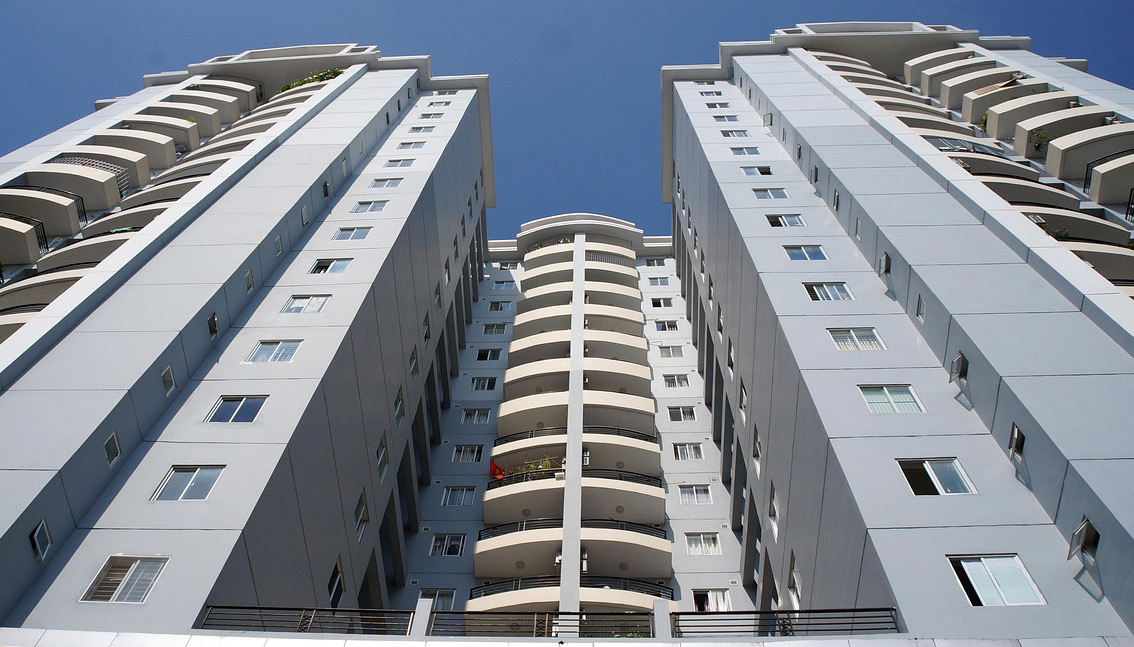
Two buildings in Florida: One has two stories and the other six. They are the same age and located in the same county. Did you know that height can significantly change what’s required, and who is qualified to perform the inspection?
For many who serve on a condominium board or own a commercial property in Florida, this is where confusion begins.
Florida’s building safety inspection landscape includes statewide milestone requirements, as well as local programs in counties like Broward and Miami-Dade and in municipalities throughout Palm Beach County. Each program considers building age, and many also factor in building height.
Let’s look at how those elements interact. In this article, we’ll walk through real-world examples, starting with the simplest case and building upward in height and complexity. Understanding what applies to your building removes uncertainty and helps you move forward with confidence when your building is due for a safety inspection.
“We’re only two stories. Do we even need a building safety inspection?”
This is one of the first questions we hear.
The honest answer? It depends on where your building is located.
In Florida, some inspection requirements are driven by story count. Others are driven by age and the local building safety inspection programs adopted by counties or cities. Height alone does not automatically exempt a building.
Example: Two-story condo in Broward County
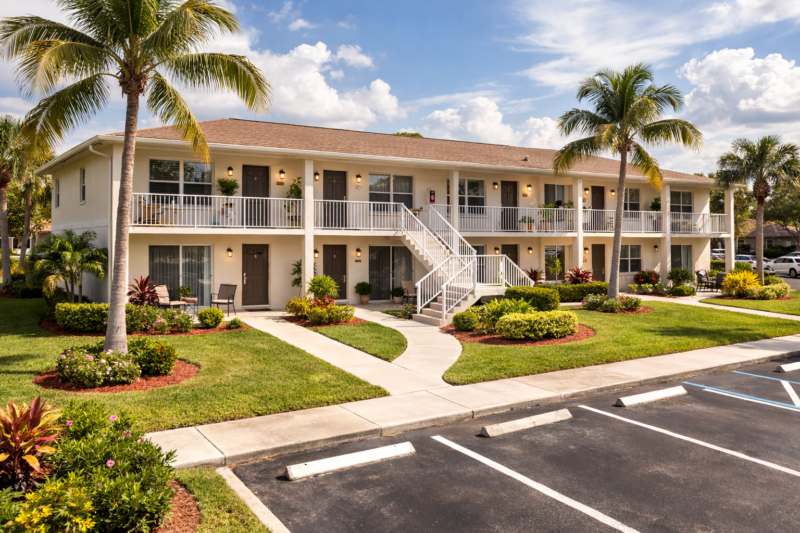
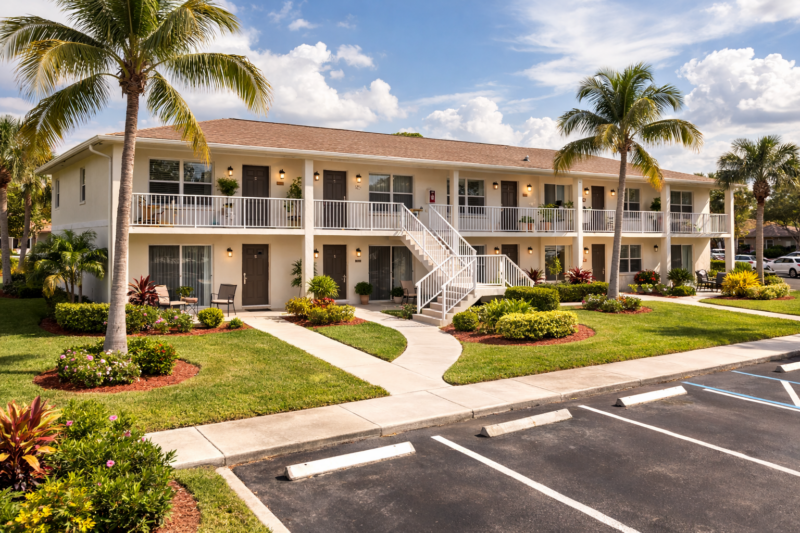
Imagine a two-story condominium in Broward County that received its Certificate of Occupancy in 1999. It’s a garden-style building. Exterior walkways. No elevators. Nothing about it feels large or complex.
Under Broward County’s current Building Safety Inspection Program (BSIP), buildings that are 25 years old or older are generally required to complete a structural and electrical safety inspection unless they qualify for a specific exemption.
While one- and two-family dwellings, fee simple townhouses, and “minor structures” under 3,500 square feet are exempt, a multi-unit condominium building does not necessarily fall into those categories, even though it is only two stories tall.
In Broward, a two-story condo that is 25 years old is usually required to complete a building safety inspection, even though it is clearly low-rise and not considered a threshold building.
What does not change at this level is the qualification required to perform the inspection. Because a two-story condominium is not a threshold building based on height or number of stories, the structural evaluation can generally be performed and signed by any Florida-licensed engineer or architect who is qualified to assess existing buildings.
The key takeaway is this: Low-rise does not always mean exempt, but low-rise usually means the requirements remain proportionate. The inspection may be required, but the level of professional credentials required does not automatically escalate.
“We’re three stories. Do we need a Milestone Inspection?”
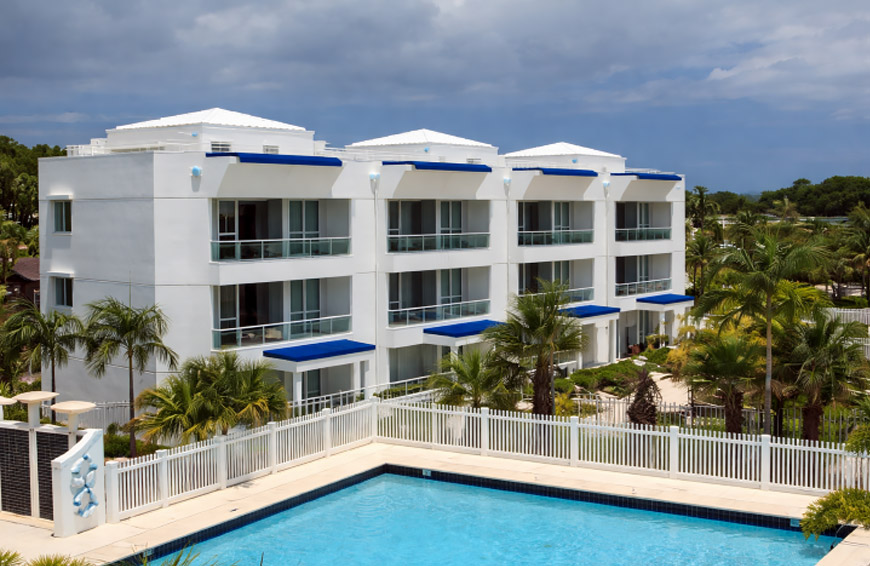
A three-story building doesn’t feel tall, but in Florida, three stories is often the point at which aging building inspection programs clearly apply.
Under the statewide Milestone Inspection law (Florida Statutes § 553.899), residential buildings that are three stories or more are the primary focus. And because many local building safety and recertification programs already apply to lower-rise buildings based on age, it should come as no surprise that three-story buildings are consistently subject to inspection requirements as well.
Note: In counties and cities with their own programs, building safety inspection requirements often extend beyond condominiums to include commercial properties such as office buildings, medical centers, and shopping malls.
That said, a three-story building is not automatically considered a threshold building. In Florida, threshold buildings are generally defined as buildings greater than three stories (meaning, four stories or more) or buildings that meet certain height or occupancy criteria.
As a result, a three-story building often sits in a middle space: The inspection is required, but the qualification requirements for the inspector have not yet escalated to the highest level.
A quick note on “threshold buildings”
The official definition of a threshold building according to Florida Statutes § 553.71(12) is “Any building which is greater than three stories or 50 feet in height, or which has an assembly occupancy classification as defined in the Florida Building Code which exceeds 5,000 square feet in area and an occupant content of greater than 500 persons.”
In simple terms, a threshold building is generally a mid- or high-rise building, most often four stories or more, where structural risk increases due to height and load.
In most cases, buildings become threshold buildings once they exceed three stories. In rarer situations, a lower-rise building can also meet the threshold definition due to its overall height (more than 50 feet) or a very large occupant load. Think of a church, convention center, or theater.
These additional criteria typically come into play under local building safety and recertification programs, which often apply to commercial properties as well as residential buildings.
For condominium buildings governed solely by the statewide Milestone Inspection law, threshold classification is almost always driven by the number of stories, not by occupancy or overall height.
Why height matters in the first place
As buildings get taller, loads accumulate. Structural systems become more interdependent. Environmental exposure increases. And the consequences of overlooked deterioration become more serious.
That’s why inspection requirements evolve with height. It’s not about creating red tape; it’s about aligning professional oversight with risk.
“We’re four stories or more. How do the building safety inspection rules change?”
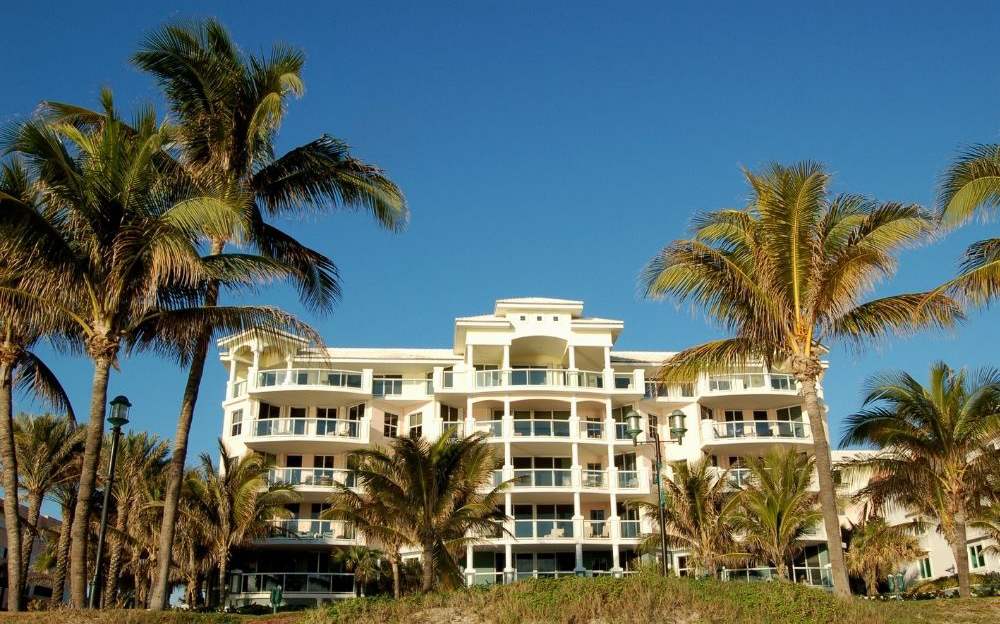
This is where you often start hearing new language. Terms like “threshold building” and “Special Inspector” enter the conversation, and it can sound intimidating at first.
Imagine a four- or six-story residential building built in the late 1990s. At this point, the building is typically classified as a threshold building under definitions used by Florida and many local programs.
The purpose of the inspection does not change; it is still about evaluating the building’s current structural condition. That said, who is qualified to perform and sign the structural portion of the inspection may change.
For example, under Broward County’s BSIP, if an aging building qualifies as a threshold building, the structural evaluation must be performed by a professional who holds a Special Inspector credential.
A Special Inspector is a Florida-licensed engineer who has obtained additional state certification demonstrating specific experience and competency in inspecting threshold buildings.
Other jurisdictions may not use identical language, but they often impose heightened qualification requirements for taller, higher-risk buildings.
This is not about construction oversight. It is about ensuring that buildings with greater structural complexity and higher life-safety risk are evaluated by professionals with demonstrated experience at that level.
In short, once a building reaches four stories or more, the inspection has the same goal, but the bar for professional credentials is higher.
What about Phase 2 inspections?
One of the biggest concerns we hear from boards is whether building height automatically triggers a Phase 2 inspection.
It does not.
Phase 2 inspections are required only if the initial Phase 1 evaluation identifies signs of structural deterioration that warrant further investigation. Height alone does not mandate Phase 2, even though taller buildings naturally require more careful evaluation because more structural systems are involved.
Bringing it all together
When boards step back and look at the full picture, most confusion comes down to a few core questions:
Are we required to do an inspection?
That depends on your building’s age and location, not just its height.
Are we low-rise or high-rise?
Legally, the dividing line is usually the number of stories, not the term “high-rise.”
Are we going to need Phase 2?
Only if significant structural deterioration is identified.
Who is qualified to sign the report?
Lower-rise buildings often allow broader professional eligibility. Under local programs, threshold buildings (typically four stories or more) may require a Special Inspector to perform the inspection and sign the report.
Once those answers are clear, the process becomes far less overwhelming.
Stay informed, confident and in control
Aging building inspections can feel complex because requirements vary by height, age, and jurisdiction. Broward County, Miami-Dade County, and municipalities such as Boynton Beach and Boca Raton in Palm Beach County all have their own programs alongside statewide requirements.
If your building has an inspection coming up, or if you’re unsure where you fall, early guidance makes all the difference.
How our engineers help
At Building Mavens, we help boards and owners understand what applies to their specific building, coordinate the appropriate level of professional expertise, and guide the process from start to finish.
Our engineers hold the Special Inspector credential and have extensive experience with buildings of all heights in Florida’s most demanding climate zones, from one-story shopping centers to 12-story condominium complexes and office towers.
Our goal is simple: to help you stay informed, confident, and in control.
If you’re approaching a milestone inspection, a building recertification or simply have questions about what applies to your property, we’re here to help.

FAQs: Building Safety & Recertification Inspections
A threshold building, as defined by the Florida Statutes (https://www.flsenate.gov/Laws/Statutes/2022/0553.71) means any building which is greater than three stories or 50 feet in height, or which has an assembly occupancy classification as defined in the Florida Building Code which exceeds 5,000 square feet in area and an occupant content of greater than 500 persons.
A special inspector (SI), as defined by the Florida Statutes (https://www.flsenate.gov/Laws/Statutes/2022/0553.71) means a licensed architect or registered engineer who is certified under chapter 471 or chapter 481 to conduct inspections of threshold buildings. Additionally, the Florida Board for Professional Engineers specifies the requirements for Special Inspectors here:https://fbpe.org/licensure/licensure-process/special-inspector/
In Miami-Dade County single-family residences, duplexes, and minor structures (defined as buildings or structures in any occupancy group having an occupant load of 10 or less, as determined by Table 1004.5 (FBC) Minimum Occupant Load of the Florida Building Code and having a gross area of 2,000 sq. ft. or less) are exempt.
In Broward County one and two-family dwellings, U.S. Government and State of Florida buildings, buildings built on Indian Reservations, school buildings under the jurisdiction of the Broward County School Board, fee simple townhouses as defined in the Florida Building Code, and minor structures (as defined above) are exempt.
Here is a link to Broward County’s Building Safety Inspection Program: https://www.broward.org/CodeAppeals/Documents/Board%20Policy%2005-05.pdf
Here is a link to Miami-Dade County’s Building Recertification Program:https://www.miamidade.gov/global/economy/building/recertification.page
Here is a link to Miami-Dade County’s Municipal Code:https://library.municode.com/fl/miami_-_dade_county/codes/code_of_ordinances?nodeId=PTIIICOOR_CH8BUCO_ARTIAD_S8-11EXBU
The structural inspection involves visually examining the building’s general condition, focusing on components supporting dead or live loads, wind loads, and electrical systems. The goal is to evaluate the effects of time on construction materials and identify potential issues such as cracks, distortion, and signs of leakage.
The electrical inspection covers various critical components, including electric service, branch circuits, conduit raceways, emergency lighting, and an infrared thermography inspection for systems operating at 400 amperes or greater.
The program encourages investigating historical documents with the local jurisdiction to enhance the overall inspection. Understanding the building’s structural system, components, and intended design guides inspectors to critical areas. Violations and unpermitted activities are thoroughly examined during recertification inspections.
Repairs identified in the recertification report will likely require permits. Do not proceed with repairs without obtaining proper permits. Some repairs may not require a permit, but most other work will, and proceeding without permits may lead to code violations.
Using approved report forms is vital for a clear understanding of the building’s conditions and successful completion of the recertification process. Reports must be concise, with required photos in color and sufficient resolution to detail the conditions being shown, as audits may occur at the discretion of the Building Official. To ensure this process is managed correctly, rely on the expertise of Building Mavens. Our team has completed this process hundreds of times. Contact us today.
To schedule a building recertification inspection, please contact us via our website or by phone. We’ll discuss your specific needs and arrange for an inspection at a time that suits you best.
About the Author
 Scott Harvey-Lewis is the owner and President of Building Mavens, a leading Milestone Inspections and Engineering Consulting firm right here in Palm Beach Gardens, Florida. With over 18 years of experience as a forensic engineer, Scott brings a wealth of knowledge and a passion for ensuring the safety and integrity of buildings. He holds a master’s degree in civil engineering from the University of Florida and a bachelor’s degree in civil engineering from the Florida Institute of Technology. He is also a Licensed Professional Engineer in Florida and a LEED Accredited Professional.
Scott’s background is extensive, covering both public and private projects. He’s highly skilled in structural engineering design, construction oversight, and forensic analysis. This includes investigating structural failures, construction defects, and code compliance – all critical to maintaining safety and adhering to building codes. Beyond his investigative work, Scott is also an accomplished design engineer, contributing to various architectural elements from building envelope systems to designs for a wide range of structures. From the initial concept to the final inspection, Scott is dedicated to providing innovative and compliant engineering solutions.
You can contact me directly for more information: info@buildingmavens.com.